Hospitality is the rare industry where the customer is already searching with intent to buy in the next 60 minutes. Someone Googling "Italian restaurant Tribeca" at 7:15pm is not browsing — they are deciding. The question is whether your business is among the three results they will tap before walking out the door of their apartment.
Why hospitality SEO is its own discipline
Hospitality search behaves differently than almost any other vertical:
- Search volume spikes at mealtimes — 11:30am, 6:30pm, 9pm on weekends. If your site is slow during those windows, the visitor is already at a competitor's restaurant by the time it loads.
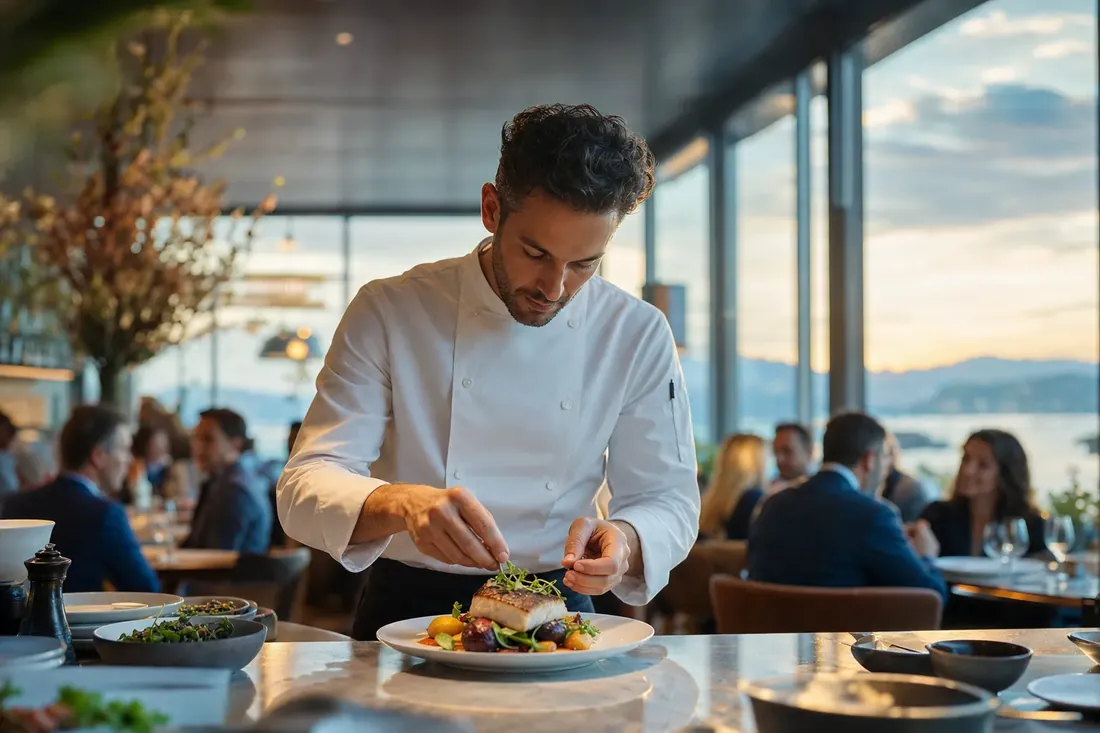
- Photos drive clicks — Google's local pack ranks restaurants partly on photo engagement. The places with great food photography (real food, well-lit, regularly updated) consistently outrank places with stock images or empty galleries.
- Reviews compound — A restaurant with 300 reviews at 4.5 stars beats one with 50 reviews at 4.7 stars in most ranking signals. Volume + freshness + response rate together drive the map pack.
- Menus are conversion content, not afterthoughts — Most restaurant menus are PDFs (which Google can barely read) or images. We build text-based menus with proper Menu schema markup that ranks for "[cuisine] near me" and converts visitors who already know what they want.
Curious where your restaurants & hospitality business stands?
30-minute free consultation. We'll look at your site, your search visibility, and tell you the 2-3 highest-leverage moves.
What we build for hospitality
- Conversion-tuned websites — Built around three actions: reserve, call, get directions. Reservation widgets (OpenTable, Resy, Tock) integrated cleanly, click-to-call prominent on mobile, Google Maps directions one tap away.
- Menu pages that rank — Real HTML menus with Menu schema, item descriptions, allergens, price ranges, and high-quality photos. These pages capture "[dish name] [neighborhood]" long-tail searches that PDFs cannot.
- Google Business Profile management — The single most important asset for any restaurant. Weekly photo uploads, menu updates, post cadence, attribute optimization (outdoor seating, takeout, delivery, dietary options), and structured review responses.
- Review funnel — Post-meal SMS or email to recent customers with a one-tap path to leave a Google review. The clients we work with typically see their review count double in 6 months, which moves the map-pack rankings on its own.
- Multi-location SEO — For chains and groups: location-specific landing pages, separate GBP listings, and a central reservation/order flow that does not dilute SEO equity across properties.
What this looks like in practice
A typical hospitality engagement runs three phases. First 30 days: audit the existing site, GBP, and review profile. Fix the obvious things that are losing reservations — slow load times, broken menus, missing schema. Months 2-6: deploy the new site (if needed), get GBP onto a weekly cadence, build the review funnel, start the menu and neighborhood-content engine. Months 6+: map-pack rankings stabilize, organic traffic for menu-specific searches climbs, and the operator stops worrying about the third-party platforms (DoorDash, Yelp) taking the customer relationship.
Who this fits
- Independent restaurants and cafés ($1M-$10M annual revenue) tired of paying Yelp/DoorDash a tax on every customer
- Multi-location restaurant groups needing centralized branding with location-specific SEO
- Bars and clubs where evening-search visibility drives the night
- Boutique hotels and B&Bs competing against OTA listings (Booking, Expedia) for direct bookings
If your restaurant is great but the website is not pulling its weight, a free consultation will tell you in 30 minutes where the leak is — slow site, weak GBP, photo problem, or something else.