











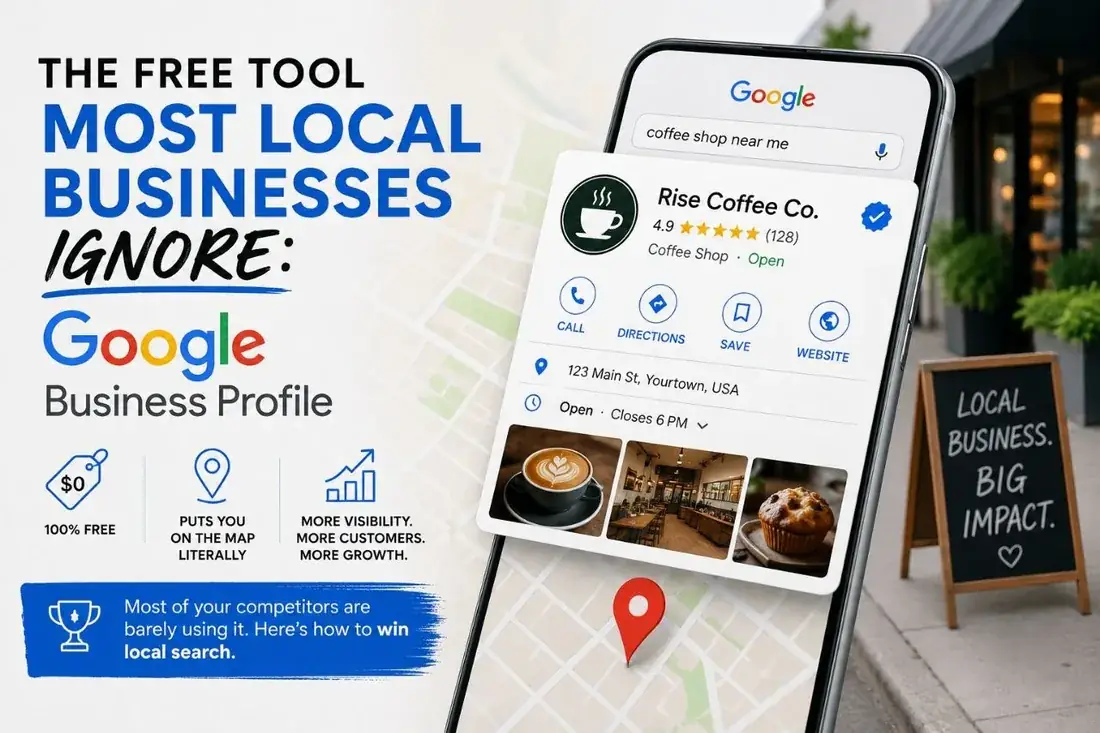

Walk down any commercial block in the country and you can spot the businesses that have a Google Business Profile (GBP) but no plan for it. The hours are right, there is a phone number, maybe a couple of old photos. That is not a profile — that is a placeholder.
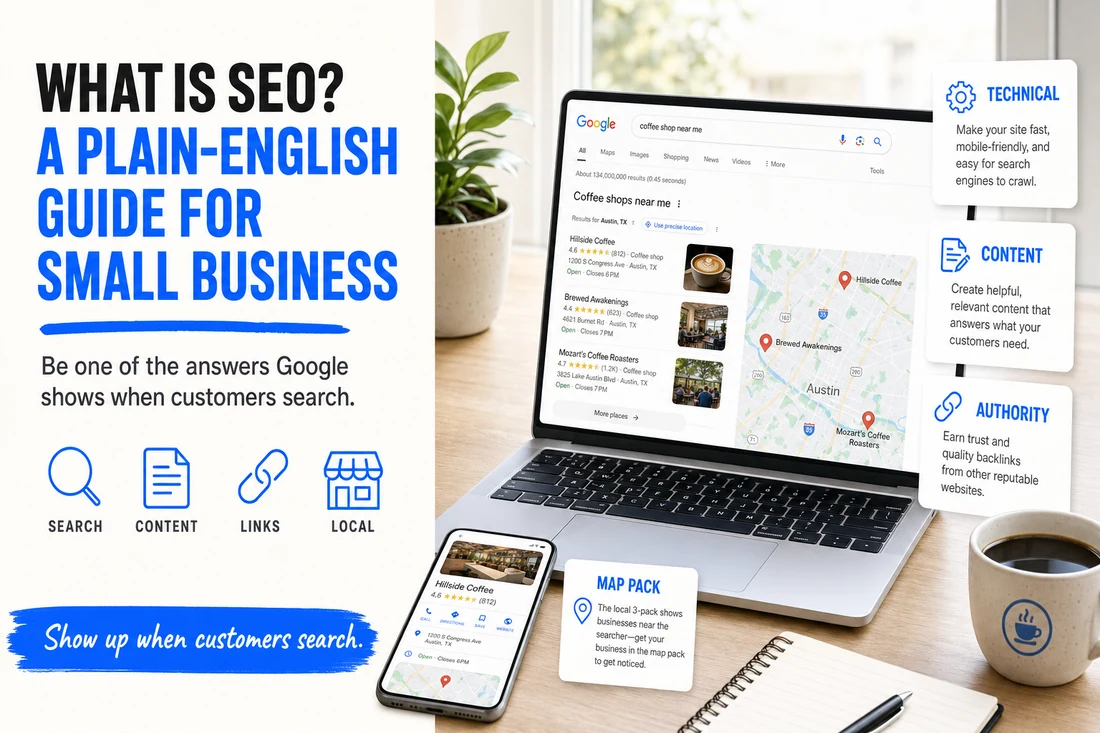
For local-intent searches ("plumber near me", "best bakery in Astoria"), Google's map pack is the top of the funnel. Three businesses get shown. The rest are scrolling past the fold. Owning a slot in that map pack is the single highest-ROI local-SEO move available, and almost nothing about getting there is technical. It is about consistency, completeness, and cadence.
- The map pack shows three businesses — owning a slot is the highest-ROI local move, and it's not technical.
- Get the primary category exact and fill secondary categories and the services menu.
- Keep a cadence: fresh geotagged photos, weekly posts, reviews answered, Q&A seeded.
- Done right, map-pack appearances and calls-from-listing often climb sharply in 60–90 days.
What our team looks at on the first audit
When NTL of NYC takes on a local-services client, the GBP audit happens in the first week. We check:
- Primary category — the single biggest ranking lever, and the one most owners pick wrong. "Restaurant" is not a category if you are a pizzeria; "Pizza restaurant" is. The exact match matters.
- Secondary categories — you can add up to nine. Most profiles use zero or one. Each one is a new query you can rank for.
- Services menu — the structured list Google reads to decide which sub-queries you fit. If your services menu says "haircut" and a searcher types "beard trim", you are invisible to them even if you offer it.
- Photos cadence — Google favors profiles with fresh photos. Not stock photos. Real ones, geotagged, uploaded weekly.
- Reviews response rate — every review responded to, ideally within 24 hours, ideally signed with a name. The pattern signals an active owner.
- Q&A seeded — most owners do not realize they can ask and answer their own questions on the profile. Five seeded Q&As covering common objections (parking, payment, kid-friendly, etc.) is a free conversion lift.
- Posts — yes, GBP has a built-in mini-blog. Weekly posts about offers, events, or updates keep the profile in Google's "active" tier.
The monthly cadence we run
An audit is a one-time exercise. Rankings come from cadence. Every NTL client on our Local SEO plan gets a monthly checklist: at least three new photos uploaded, at least one GBP post published, every review responded to, one new Q&A added, citation consistency re-checked (NAP — name, address, phone — across the 20+ directories that feed Google), and a competitor-set snapshot so we know where we are gaining or losing.
What changes when this is done right
Across our client base, businesses that go from a neglected profile to an actively managed one typically see map-pack appearances climb sharply in 60–90 days. "Calls direct from listing" — the metric you can pull from the GBP insights dashboard — is what we point clients at; it is the closest thing to a lead-attribution chain Google gives you. Doubling that number inside a quarter is normal, not exceptional.
The catch: it is repetitive work that has to happen forever. Most owners try it once, get bored, and abandon it. That is exactly why an agency cadence beats a DIY attempt — not because the steps are complicated, but because the discipline is.
Common questions
Is a Google Business Profile really a lead channel? Yes. Treated actively, with posts, photos, reviews, and Q&A, it generates direct calls and direction requests, not just a static listing.
What is the biggest GBP ranking factor? A complete, active profile plus a steady flow of recent reviews. Both signal authority and relevance to Google.
How often should I update my profile? Regularly. Fresh photos, weekly posts, and prompt review responses keep the profile active and competitive.