








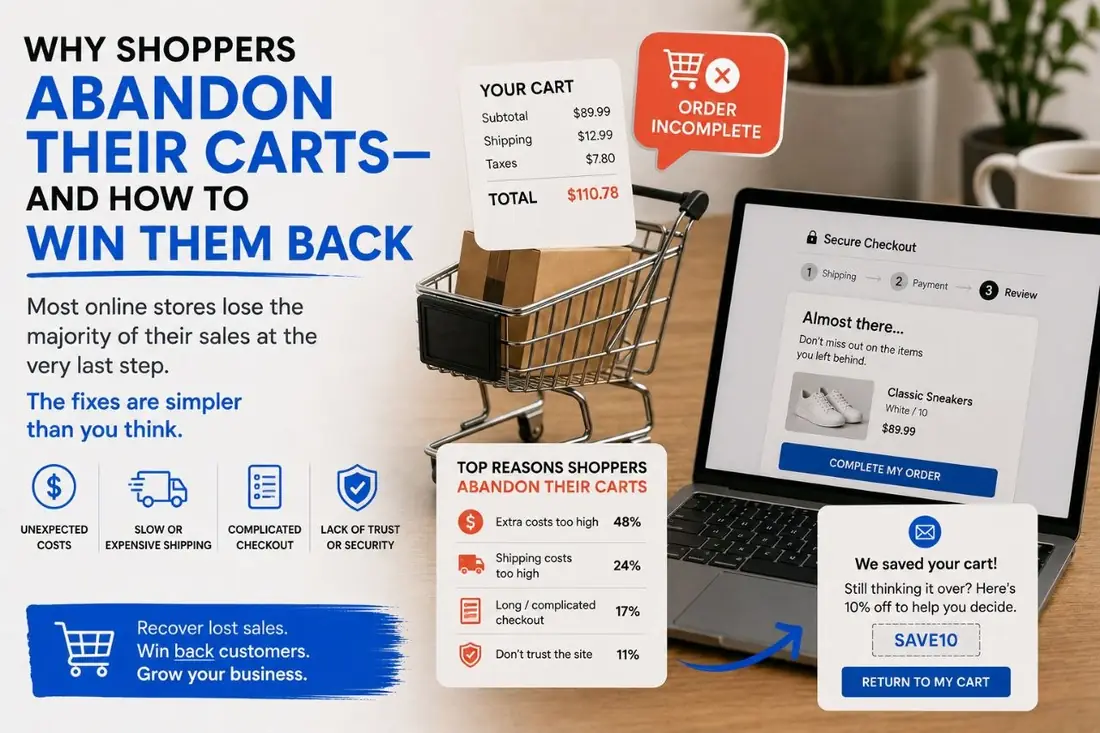


The average cart abandonment rate sits near a brutal 70%. For every ten shoppers who add to cart, seven leave without buying. Most of that is friction, and friction is fixable. Here are the five changes that reliably pull abandonment down by around 20%.
- Make guest checkout the default, never force account creation.
- Show shipping, tax and fees early, with no surprises at the last step.
- Stack trust signals right at the payment step.
- Use a one-page checkout and lead with express mobile pay.
The 5 fixes at a glance
| Fix | What to do | Why it works |
|---|---|---|
| Guest checkout | Drop forced registration; offer the account on the thank-you page | Removes the biggest commitment wall before purchase |
| Transparent costs | Show shipping and tax on the cart, or a "free over $50" bar | Surprise fees are a top-cited reason shoppers bail |
| Trust at payment | Review rating, security badges and a guarantee near the button | Answers "is my data safe, and will I actually get it?" |
| One-page checkout | A single accordion page plus address autocomplete | Fewer steps means fewer second thoughts and reloads |
| Express mobile pay | Apple Pay, Google Pay and PayPal at the top of the flow | No 16-digit typing on a phone; finish in seconds |
Diagnose where you are losing them
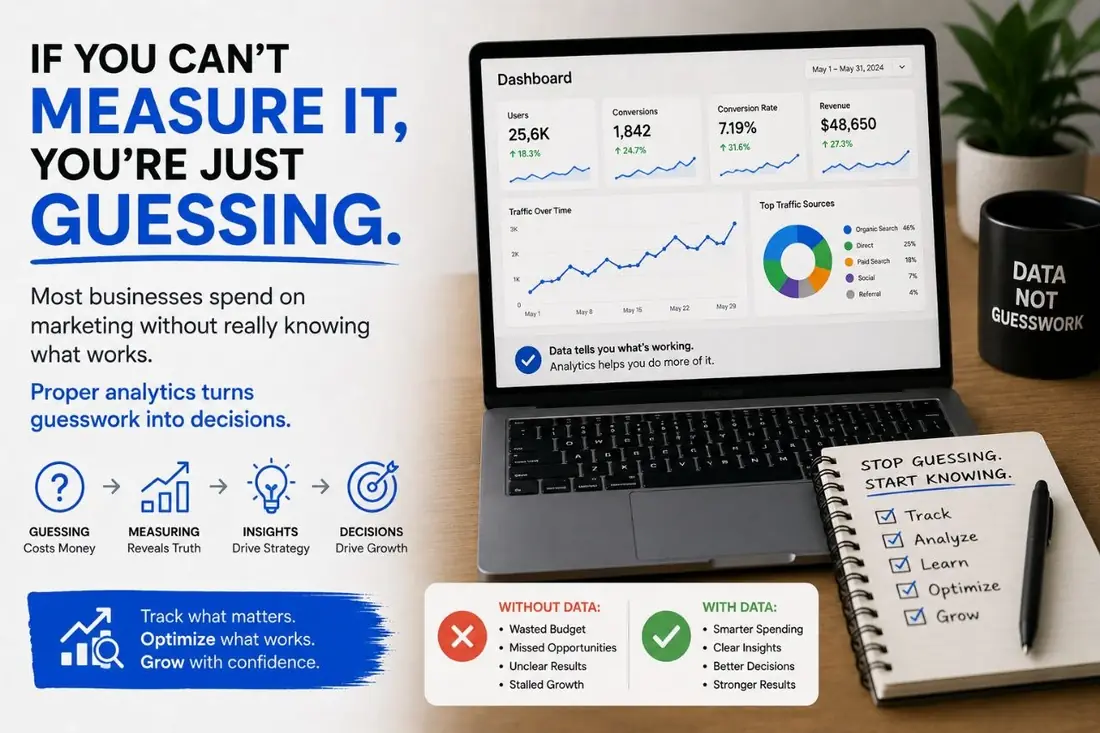
Your analytics point to the fix. Watch where people drop:
- Leaving on the shipping page usually means rates are too high or shown too late.
- Leaving on payment often means a slow or untrustworthy gateway, or no express option.
- Leaving at "create account" means the registration wall is costing you sales.
It is a cycle, not a one-time fix. Remove forced registration, show costs honestly, stack trust signals, streamline the UI, and enable express pay, and you have a checkout that converts around the clock. We treat this as data science, not decoration.
Common questions
Why is my mobile conversion rate worse than desktop? Mobile shoppers are distracted and friction is magnified on small screens: slow loads, tiny form fields, and missing express-pay options are the usual culprits.
Does guest checkout help SEO? Not directly, but it improves user signals like bounce rate, and a smoother experience compounds into authority over time.
Which trust signals should I use? It depends on the product: guarantees for high-ticket items, compliance badges for data-sensitive ones. Always A/B test placement.
What is a good cart abandonment rate? The average is about 70%. Top stores push toward 55% or lower with a mix of technical optimization and remarketing.