






















A prospect fills out your contact form at 9:02 on a Tuesday morning. They are at their desk, the problem is top of mind, and they just submitted the same form on two of your competitors' sites. Whoever calls back first has an enormous, often decisive advantage. If your reply lands at 9:04, you are in the conversation. If it lands at 11:30 — or the next morning — you are following up with someone who already booked the other guy.
This is the single most under-managed lever in small-business marketing. Owners pour money into ads and SEO to generate the lead, then let it sit in an inbox for hours. The traffic problem gets all the attention; the response-time problem quietly eats the return.
- Replying within 5 minutes vs 30 makes you about 21× more likely to qualify a lead.
- Intent decays fast and buyers shop around — the first credible reply usually wins.
- Most slowness is structural: unwatched inboxes, no routing, after-hours gaps.
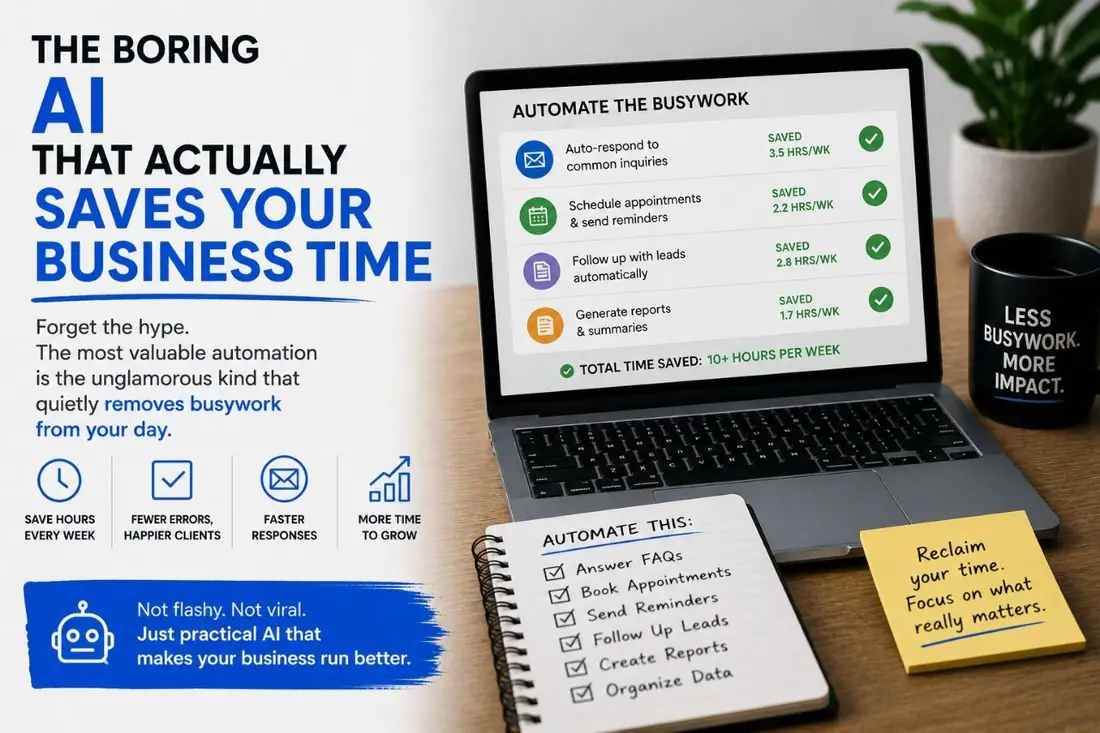
- The fix is automation: instant auto-reply, missed-call text-back, routing, after-hours coverage.
The five-minute rule, and the numbers behind it
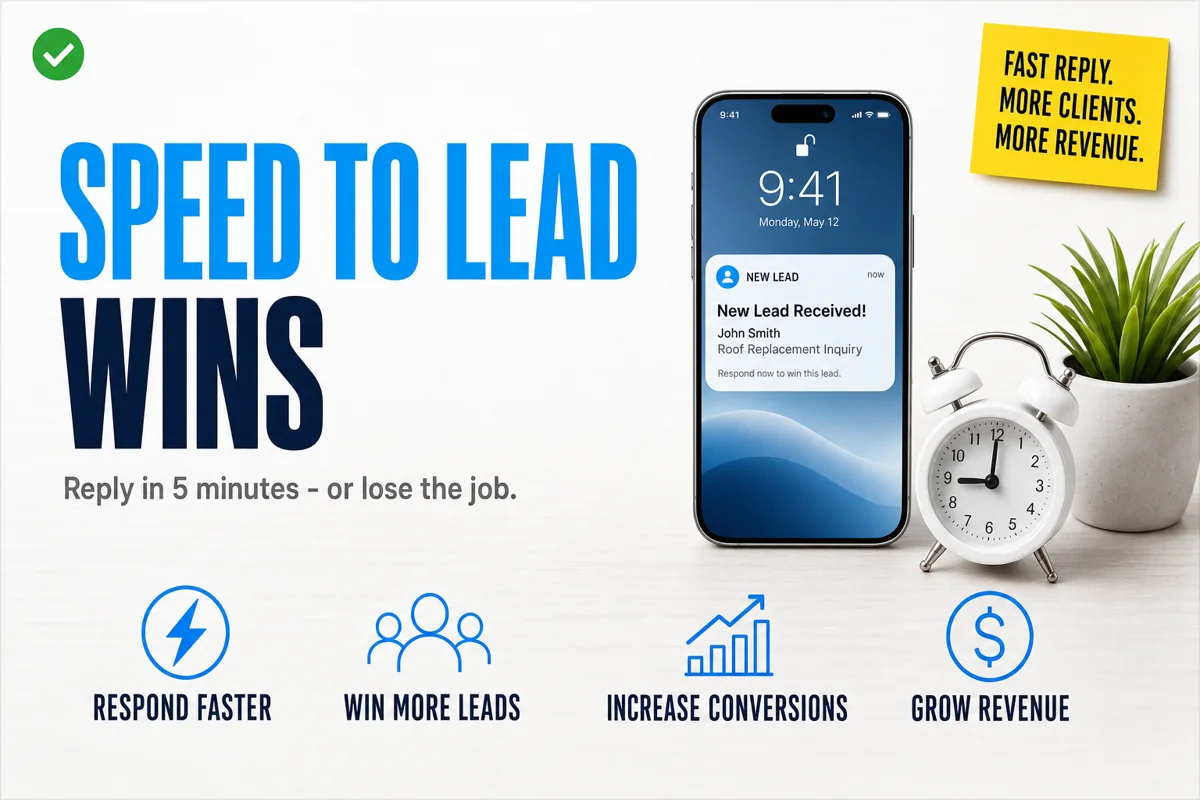
The research on lead response time is remarkably consistent across industries. The headline finding from the landmark Lead Response Management study: contacting a web lead within five minutes versus thirty minutes makes you roughly 21 times more likely to qualify that lead. Wait an hour and the odds collapse. Wait until the next day and most of those leads are cold or gone.
Two things drive it. First, intent decays fast — the moment someone hits "submit" is peak motivation, and every minute after that the urgency fades. Second, most people shop more than one option, so the race is literal: first credible response often wins by default, before price or quality ever enter the conversation.
Why most businesses are slow
It is almost never laziness. The usual culprits are structural:
- Form submissions land in an inbox no one watches in real time. The owner is on a job site, the office manager is on another line, and the email sits unread for hours.
- No routing. The lead arrives, but it is unclear whose job it is to respond, so everyone assumes someone else has it.
- Manual everything. Even a fast, motivated team cannot beat five minutes consistently when every step — see it, read it, decide, call — is done by hand around other work.
- After-hours and weekend gaps. A large share of leads arrive when no human is at the desk, and a silent autoresponder-free gap until Monday is a guaranteed loss.
What NTL of NYC installs
The fix is mostly automation, and it is the same stack we wire into every client site where lead capture matters:
- Instant auto-text and auto-email. The moment a form is submitted, the prospect gets a real, branded reply within seconds — acknowledging the request by name, setting expectations ("a specialist will call you in the next few minutes"), and keeping you top of mind while a human catches up.
- Missed-call text-back. If someone calls and you cannot pick up, an automatic text fires immediately so the conversation does not die at voicemail. This single feature recovers a startling number of otherwise-lost calls.
- Lead routing and alerts. New leads ping the right person on the right channel — SMS, Slack, or a shared dashboard — with no ambiguity about ownership. The clock everyone is racing becomes visible.
- After-hours coverage. An automated first response and a scheduled call-back slot mean a 9pm lead is engaged at 9pm, not at 9am two days later.
The four wins this unlocks
Done right, faster lead response compounds through the whole funnel. Respond faster means you reach prospects at peak intent. That lets you win more leads, because you are the first credible voice they hear. More conversations at the top means you increase conversions without spending another dollar on traffic. And more closed jobs from the leads you already paid to generate is the most direct way to grow revenue — you are not buying more leads, you are stopping the leak in the ones you have.
The honest takeaway
If you are spending on ads or SEO and your response time is measured in hours, you are funding a leaky bucket. Faster traffic into a slow funnel just loses leads faster. Fix the response time first — it is cheaper than more traffic, it is largely automatable, and it pays back on the very next lead that comes in.
Common questions
How fast should I respond to a new lead? Within five minutes. Contacting a web lead in five minutes versus thirty makes you roughly 21 times more likely to qualify it.
Can lead response really be automated? Yes. Instant auto-text and auto-email, missed-call text-back, and lead routing all fire the moment a form is submitted, so you never lose the five-minute race by hand.
Is faster response better than buying more traffic? Almost always. Fixing response time is cheaper than more leads and stops you losing the ones you already paid to generate.