

















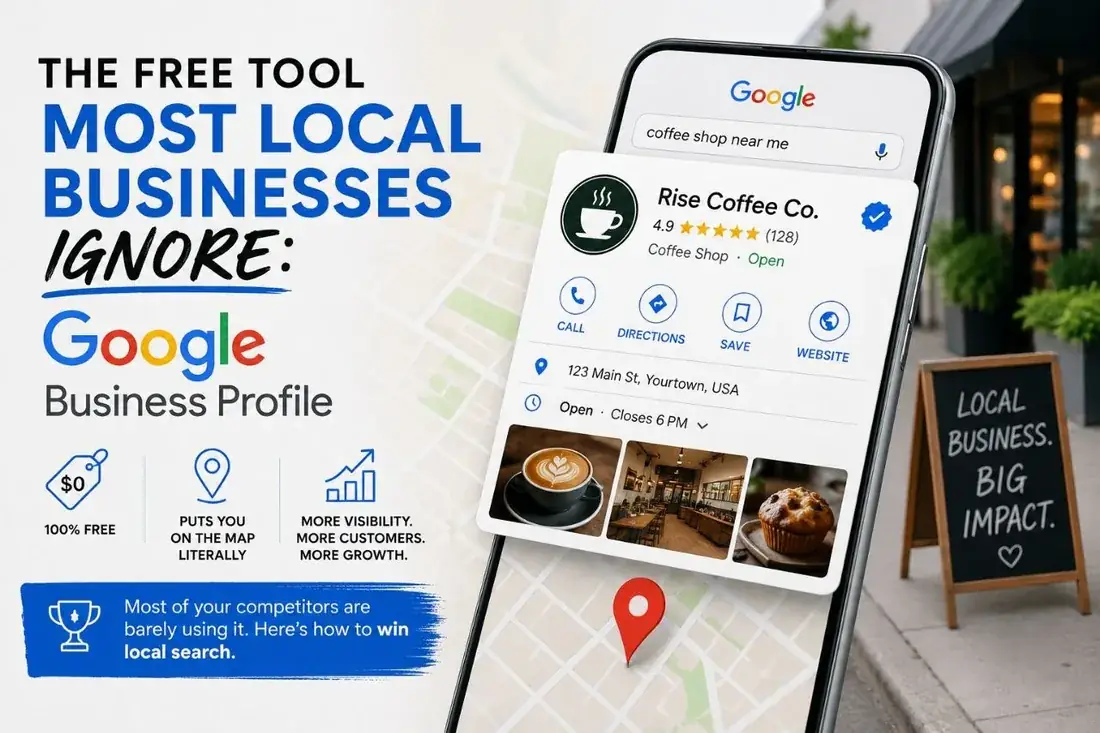





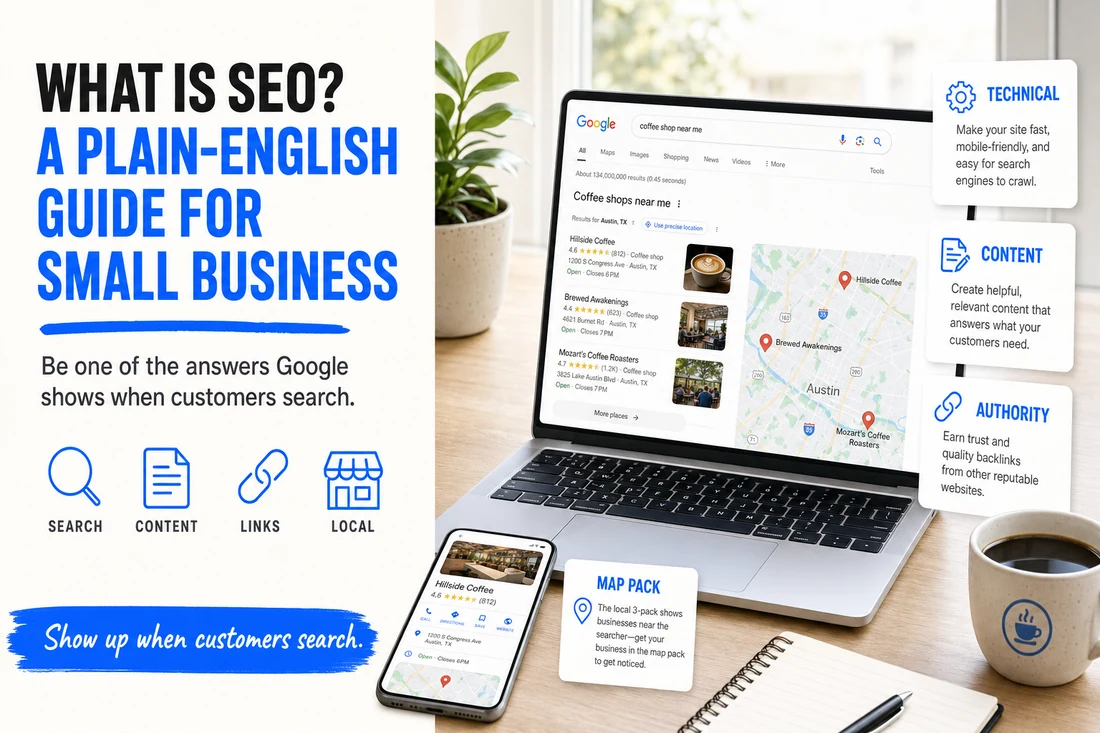
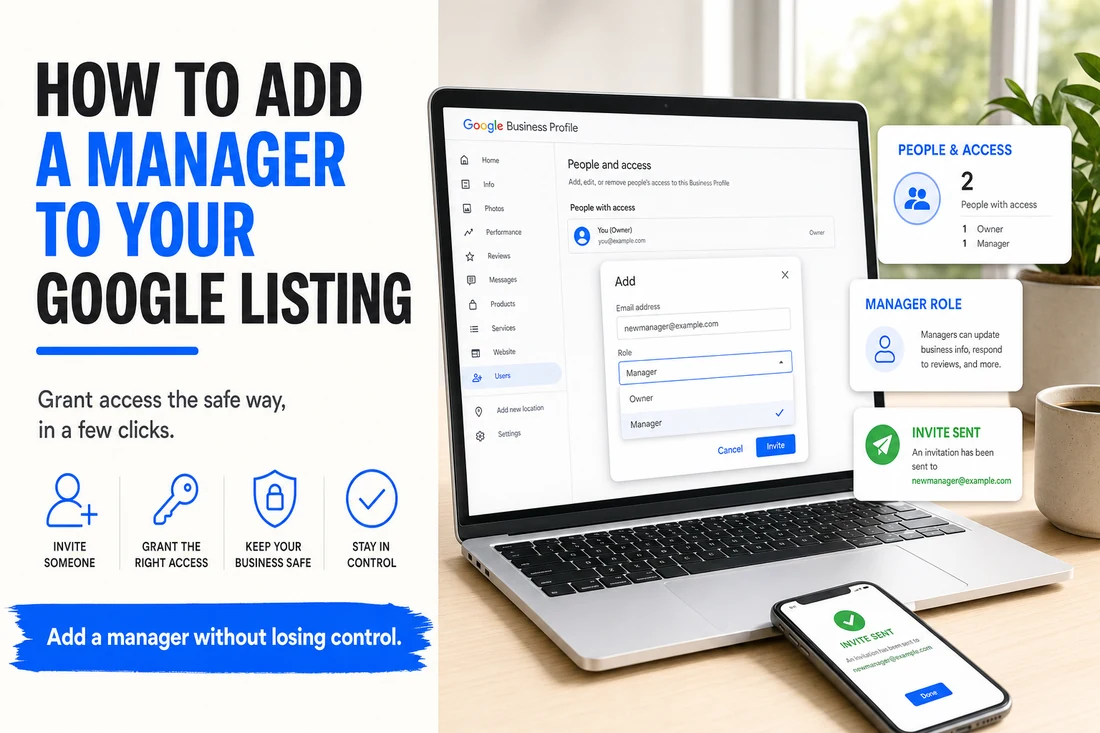


In a dense market, visibility is not just page one of Google, it is the Local Map Pack: the box of three businesses at the top of a local search. Those three spots capture nearly 45% of local-search clicks. And local runs on a different algorithm than organic, it rewards proximity, relevance, and prominence. Here is how to engineer all three.
- Nail your Google Business Profile, especially the exact primary category.
- Point the listing at a location-specific landing page, not your homepage.
- Keep NAP (name, address, phone) identical everywhere.
- Chase review velocity (fresh reviews), not just star count.
The four levers
| Lever | What to do | Why it moves the pack |
|---|---|---|
| Google Business Profile | Exact primary category plus fully written, keyword-rich services | Tells Google which relevance bucket you are in |
| Geo landing page | A location page with embedded map, landmarks and local content | Ties your business to the physical area |
| Citations (NAP) | Identical name, address and phone across Yelp, Apple, Bing and niche dirs | Validates your location data and builds prominence |
| Reviews | Steady fresh reviews, and reply to every one with relevant keywords | Velocity and keywords beat an old, static star count |
Get those four working together and you stop fighting for organic scraps and start owning the three spots that capture most local clicks.
Common questions
How is the Map Pack different from regular SEO? Organic SEO rewards site-wide authority and backlinks; the Map Pack rewards proximity, relevance, and prominence. You can rank in one without the other, so they need separate strategies.
How long does it take to rank in the Map Pack? Profile and citation work can show movement in weeks, but durable top-three placement in a competitive market usually takes a few months of consistent effort.
What is the single biggest lever? Choosing the most precise primary category on your Google Business Profile, followed closely by a steady flow of fresh, keyword-rich reviews.