

















SEO stands for "search engine optimization." That is one of the least-helpful three-word definitions in marketing. Let us try again.
SEO is the work of making sure that when someone types a question your business can answer into Google, your business is one of the answers Google shows them. That is it. Everything else is detail.
- SEO = being one of the answers Google shows when someone searches what you offer.
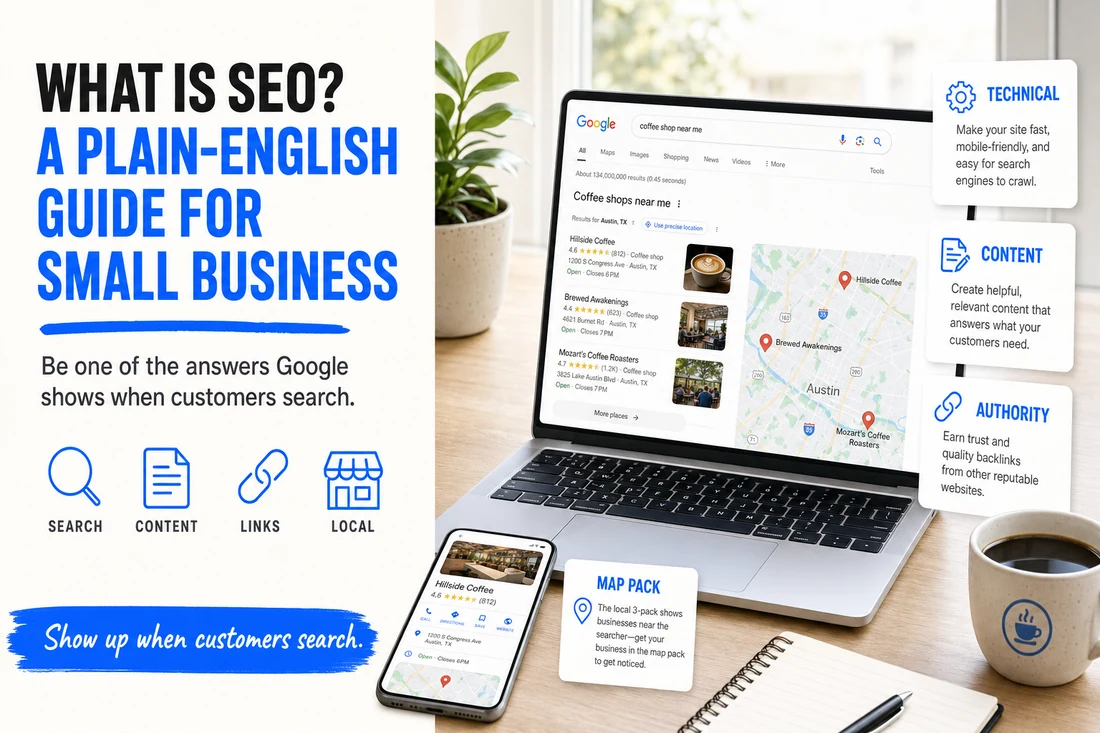
- Three pillars: technical (can Google read your site), content (do you answer questions), authority (who links to you).
- It's a compounding, multi-year investment — not a 30-day fix or magic keywords.
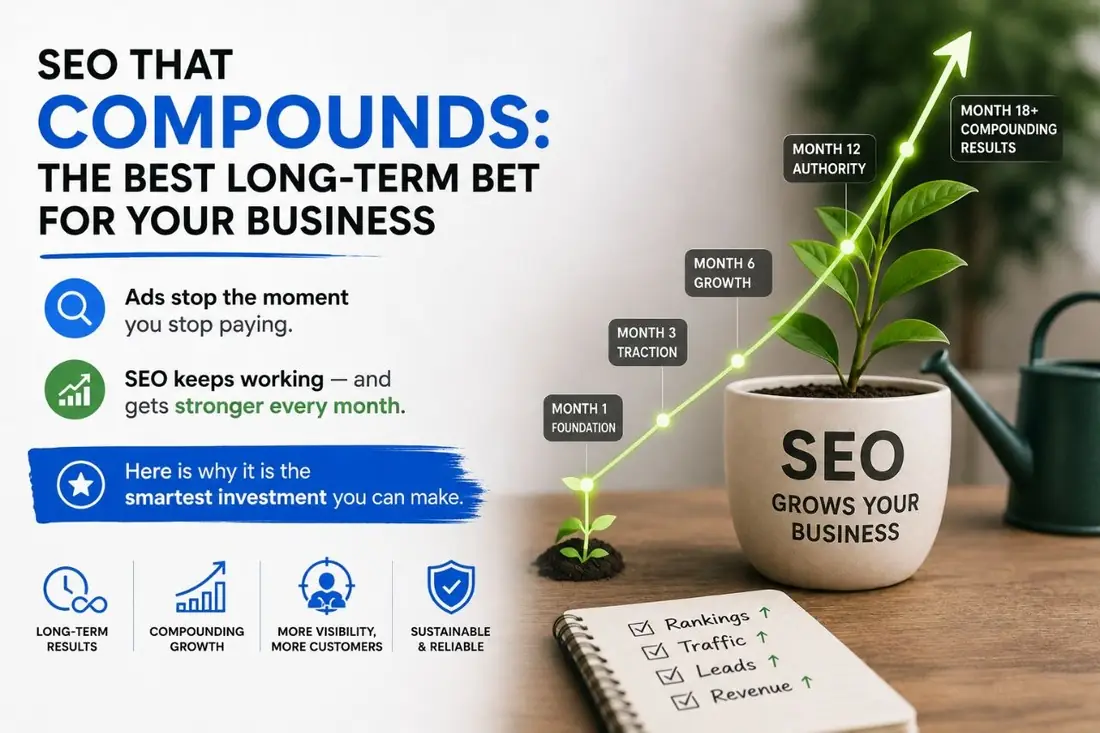
- Expect long-tail rankings by month 3–6, competitive local wins by 6–12.
Why it matters for small businesses
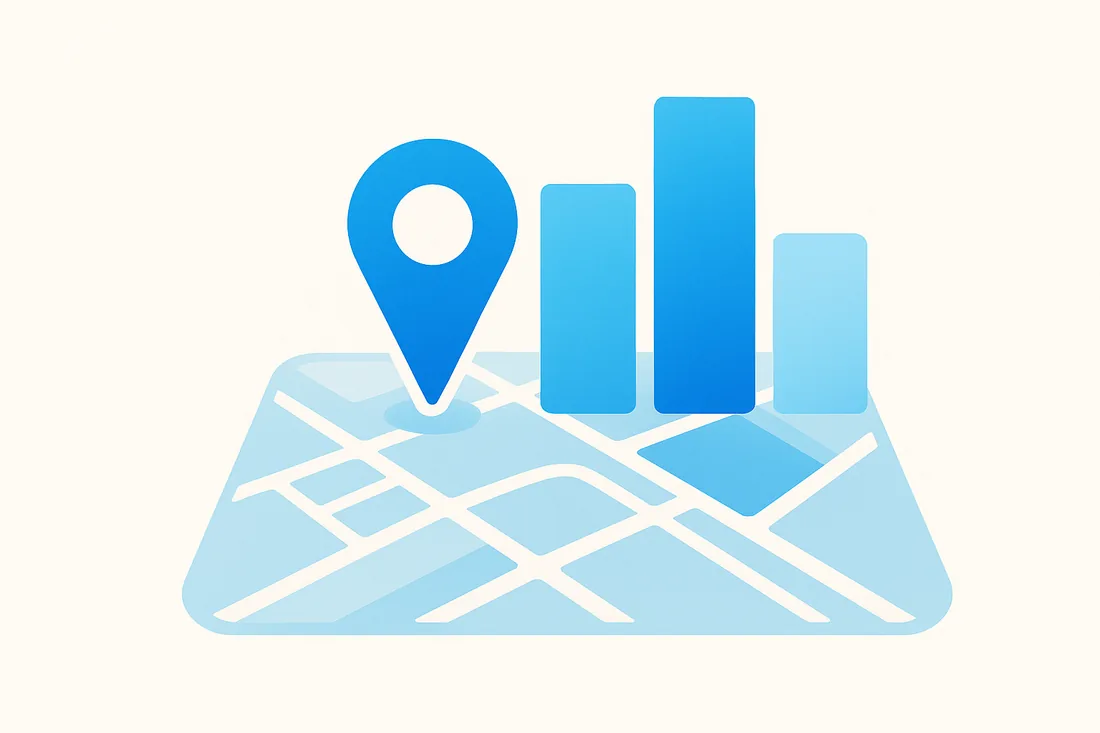
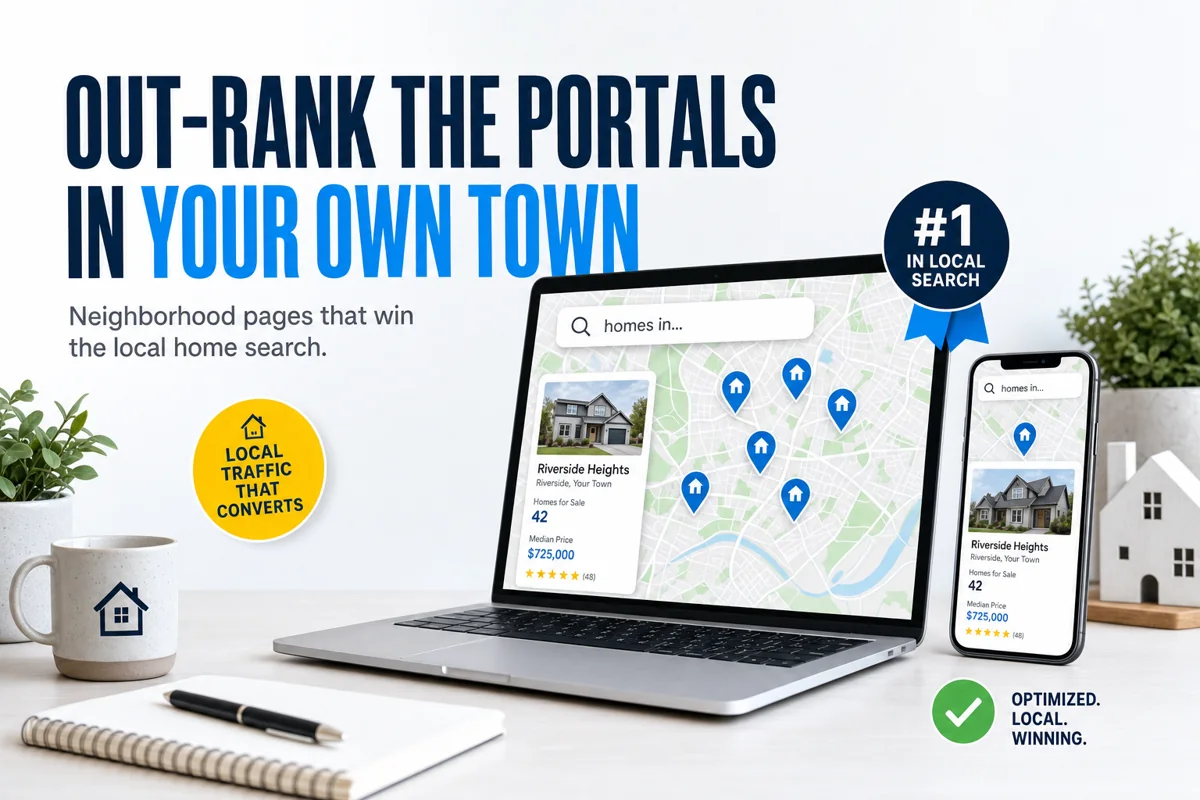
When a customer searches "best pizza Brooklyn," Google shows them three restaurants on a little map at the top of the page. Those three businesses get the vast majority of clicks from that search. If you are not one of them, you are invisible. SEO is the work of becoming one of them.
This matters disproportionately for small businesses because local search is often the only way new customers find you. National brands can afford TV ads. You probably cannot. But you can show up first when someone in your neighborhood searches for what you offer — and that costs nothing once it is earned.
The three pillars in plain English
- Technical SEO — Can Google's robot read your website easily? This covers site speed, mobile friendliness, secure HTTPS connection, and a few dozen other items most owners never look at. If Google's robot has a hard time reading your site, no amount of great content will rank.
- Content SEO — Does your website actually answer the questions customers ask? A plumbing company that has a website with just a homepage and a contact page cannot rank for "how to fix a leaking pipe under the sink" because they have not answered that question on their website. Content SEO is the work of writing the answers.
- Authority SEO — Do other reputable websites point to yours? If the local news mentions your business, that link tells Google your business is legitimate. The more such mentions, the more Google trusts you. This is the slowest and hardest pillar — and the one that gives the biggest long-term moat.
What SEO is NOT
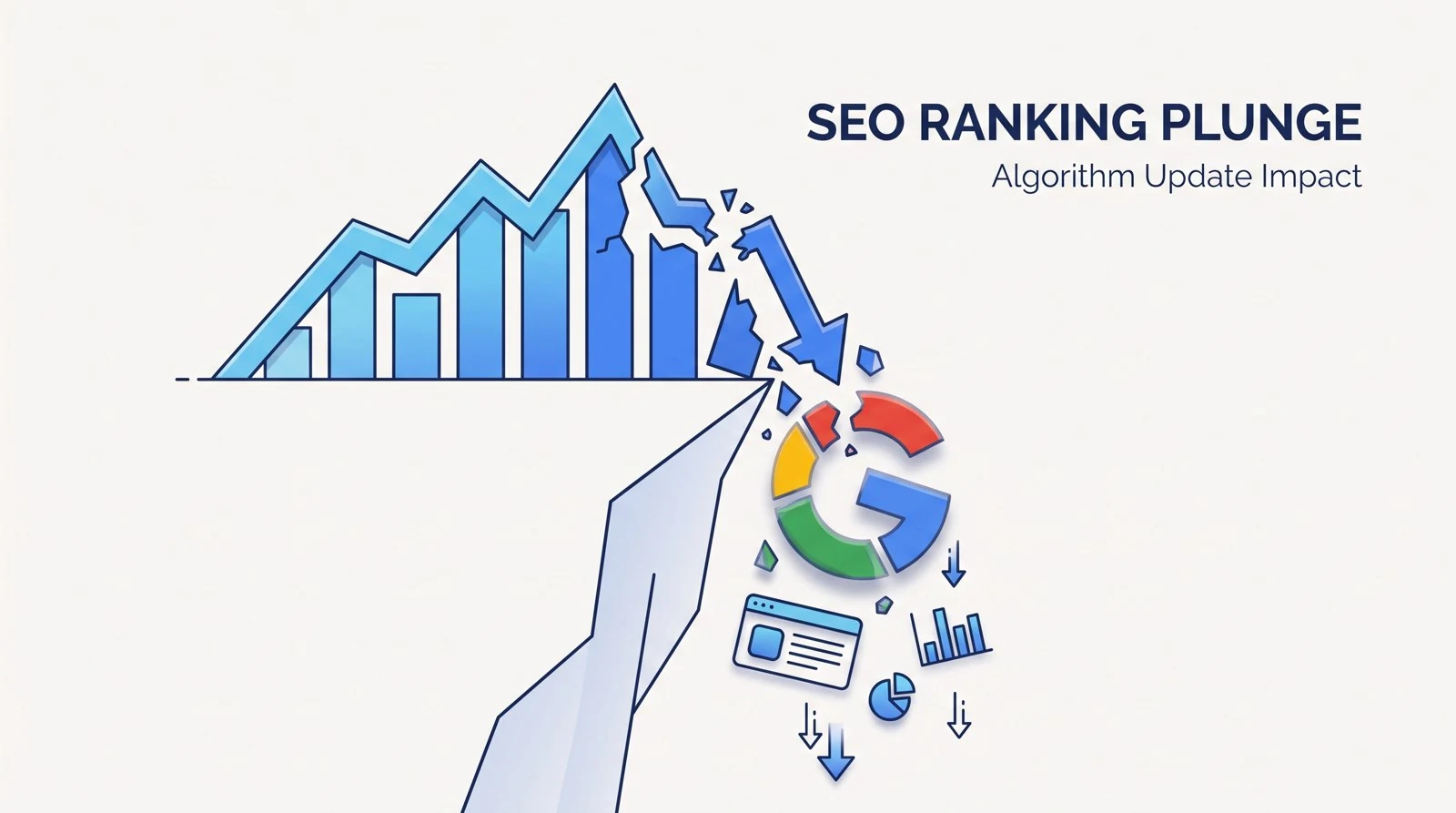
- A quick fix. If someone promises rankings in 30 days, they are either spamming Google (which gets you banned eventually) or they are lying.
- A one-time project. SEO is a compounding effort over years, not a thing you "do once" and forget.
- The same as Google Ads. Paid ads buy clicks. SEO earns them. Both are valid, but they are different work.
- Magic keywords. "Stuffing" keywords on your homepage stopped working over a decade ago. Modern SEO is about answering real questions in real language.
Realistic timeline
For a small business starting from zero:
- Month 1–3: Foundation. Fix technical issues, claim and complete Google Business Profile, write the first batch of useful content. Few rankings show up yet.
- Month 3–6: Long-tail keywords start appearing. Brand-name searches reliably find you.
- Month 6–12: Competitive local rankings begin. Map pack visibility climbs.
- Year 2 onward: The compounding period. Organic becomes the largest source of new leads for most businesses.
When to DIY vs. hire help
If your time is worth less than the cost of an agency and you genuinely enjoy learning a new skill, DIY SEO is achievable. There are great free resources online. Plan to spend 5–10 hours a week for at least a year.
If your time is worth more than that, or you want results without spending those hours yourself, hire an agency. Make sure they explain what they are doing in language you understand. Any agency that says "trust us, this is technical" without explaining is hiding the work.
SEO is not magic and it is not impossible. It is a long, slow, compounding investment that, done right, becomes the most reliable source of new customers a small business can build.
Common questions
What is SEO in plain English? It is the practice of making your website easy for search engines to find, understand, and rank, so customers discover you when they search.
Is SEO worth it for a small business? Yes. Local and long-tail SEO bring in customers actively looking for what you offer, often at a lower cost than ads.
How long does small-business SEO take? Early wins can appear within weeks, but meaningful, lasting results typically take a few months of consistent work.