










A growing share of buyers no longer start at a search box. They ask an assistant — ChatGPT, Gemini, Copilot, Perplexity — "who should I hire for this?" and act on the names that come back. Being one of those names is not a matter of luck or ad spend. It comes down to whether AI models can clearly identify your business and trust the signals around it. That work has a name: entity optimization.
- Buyers increasingly ask assistants "who should I hire?" — being named is entity optimization, not ad spend.
- AI sees you through entities, structured signals (schema, NAP), and authority/mentions.
- Standardize entity data, add Organization/LocalBusiness/FAQ/Review schema, earn credible citations.
- Structure content as pillars and clusters and iterate monthly on what assistants cite.
How AI actually "sees" your brand
Three ideas explain most of it:
- Entities and knowledge graphs. Models map your brand as an entity with attributes and relationships, not a string of keywords. The clearer that entity, the more reliably you are recalled.
- Structured signals. Schema.org markup, consistent name-address-phone (NAP) data, and FAQ/Review schema give the parsers and graph builders something machine-readable to anchor to.
- Authority and mentions. Citations from trusted, recognizable sources raise the odds an assistant includes you in a generated answer.
The build: making your business discoverable by AI
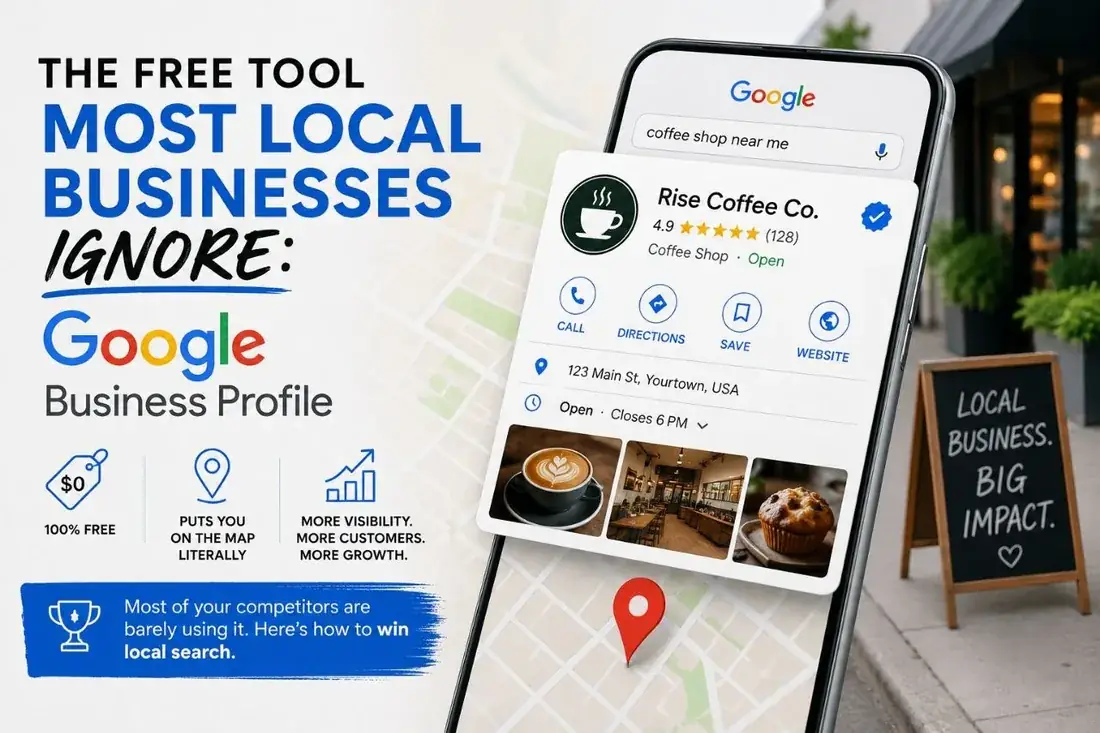
- Claim and standardize your entity data. Align your brand name, description, categories, and NAP across your site, Google Business Profile, and the major directories. Create or correct a Wikidata entry and make sure it points to your official site.
- Implement comprehensive schema. Add Organization, LocalBusiness (where it applies), Service, FAQPage, and Review markup to the right pages, and use
sameAsto connect your official profiles. Validate with Google's Rich Results Test. - Publish cornerstone content that answers intent end-to-end. Long-form guides and service pages with clear headings, tight paragraphs, and internal links. Models prefer well-structured, authoritative sources.
- Earn credible mentions. Contribute data or insight that industry publications, associations, or recognized media will cite. Those references move the needle on how AI weighs your authority.
- Keep the technical foundation clean. Fast pages, accessible HTML, strong Core Web Vitals, canonical tags, sound internal linking, and a current sitemap so crawlers and third-party graph builders can parse you reliably.
- Track and iterate. Test branded and non-branded queries across the major assistants, log which sources they cite, and close the weakest gaps — missing schema, entity conflicts, thin citations — every month.
Structure it as pillars and clusters
Organize content so one pillar page covers the full topic and each cluster post answers a specific sub-question and links back. Add FAQ sections and review modules on commercial pages — they are exactly the trust signals models reach for when they build an answer.
The brands that win the AI era are the ones machines can identify without ambiguity and trust without hesitation. That is an engineering problem, and it is a solvable one.
Common questions
Can I optimize for just ChatGPT? Not directly. You optimize the underlying signals — entity clarity, schema accuracy, trusted citations — and those help every assistant retrieve and reference you.
Is a Wikidata entry mandatory to appear in AI answers? It helps, but it is not the only path. Consistent Organization schema and credible media mentions also lift visibility.
How is AI visibility different from classic SEO? Classic SEO wins rankings on the results page. AI visibility gets your brand named inside the generated answer, with credible context and links.